
When most people think of ants, they picture the tiny black ones marching across the kitchen counter toward a crumb. Annoying, sure, but harmless. Carpenter ants are a completely different story. These large, wood-destroying insects can cause thousands of dollars in structural damage to your home — and they often work undetected for months or even years before you notice.
At Campbell's Pest Control, carpenter ants are one of the most common — and most serious — pest problems we treat across Central Maine. Here's what every homeowner needs to know.
Carpenter Ants vs. Regular Ants: What's the Difference?
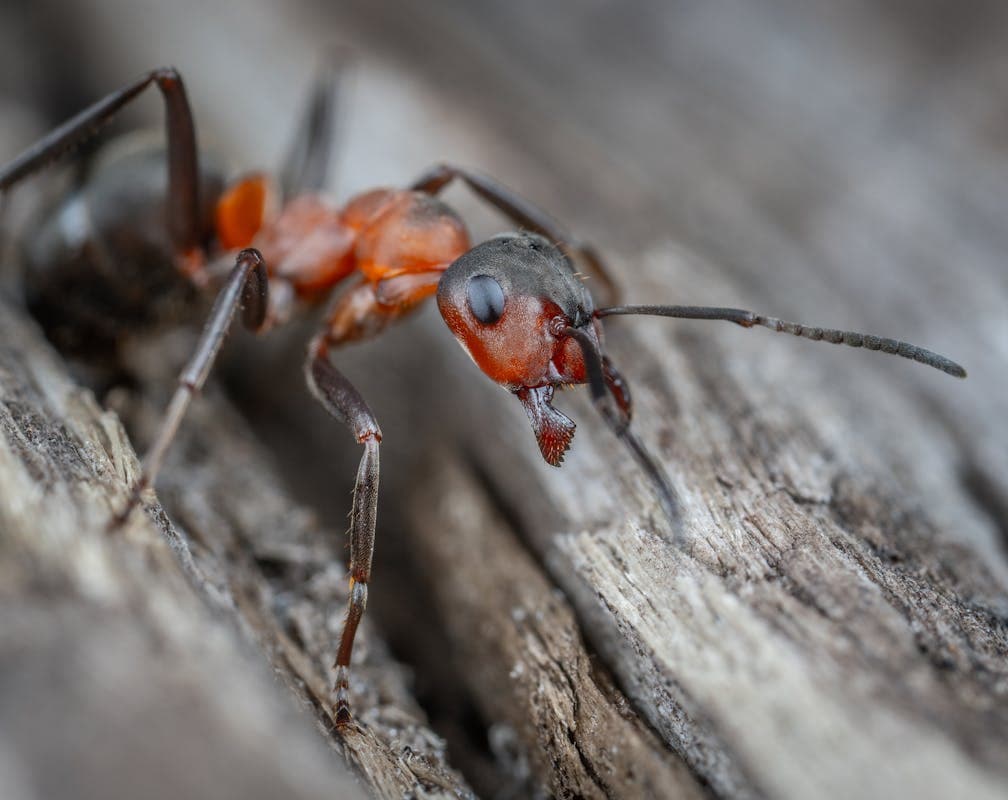
Carpenter ants are significantly larger than common household ants. Workers range from a quarter inch to half an inch long, and queens can be nearly an inch. They're usually black, though some species in Maine are reddish-brown or a combination of both.
The critical difference isn't size — it's behavior. Regular ants are foraging for food. Carpenter ants are excavating wood to build their nests. They don't eat wood like termites do. Instead, they chew through it, creating smooth-walled galleries where the colony lives and breeds. The wood shavings they produce get pushed out of the galleries, creating small piles of frass — a key sign of their presence.
How Carpenter Ants Damage Your Home
Carpenter ants prefer softened, moisture-damaged wood because it's easier to excavate. They typically start in areas where wood has been weakened by water — around leaky windows, under bathroom fixtures, in roof eaves, or in wood that contacts damp soil.
But they don't stop there. Once a colony is established, they'll extend their galleries into perfectly sound structural wood — joists, studs, beams, and sill plates. Over time, this creates hollow sections that compromise the structural integrity of your home. We've seen cases where load-bearing beams were so honeycombed with galleries that they were on the verge of failure.
The damage is similar to termite damage but with a key difference: carpenter ant galleries are clean and smooth, while termite damage is rough and packed with mud. If you're not sure which you're dealing with, a professional inspection can tell you immediately.
Signs of a Carpenter Ant Infestation
Catching a carpenter ant problem early can save you thousands in repairs. Watch for these warning signs:
- Frass (sawdust piles). Small, cone-shaped piles of wood shavings, often mixed with dead insect parts, found beneath holes in wood. Check near baseboards, windowsills, door frames, and in the basement or attic. Frass looks like fine sawdust and is one of the most reliable indicators of carpenter ant activity.
- Rustling or crinkling sounds. If you press your ear to a wall where carpenter ants are active, you can sometimes hear a faint rustling or crinkling sound. It's the sound of hundreds of mandibles working through wood. This is easier to detect at night when the house is quiet.
- Winged swarmers. In spring, mature carpenter ant colonies produce winged reproductives (swarmers) that emerge to start new colonies. Finding large winged ants inside your home — especially near windows — is a strong sign of an established indoor colony. This is not a new problem; it means the colony has been there long enough to mature, usually three to five years.
- Trailing ants at night. Carpenter ants are most active after dark. If you turn on the kitchen or bathroom light at midnight and see large black ants, follow their trail. They often travel along plumbing lines, electrical wires, and the edges of countertops between their nest and food sources.
- Hollow-sounding wood. Tap on wood surfaces near suspected activity. If it sounds hollow instead of solid, galleries may have been excavated inside.
These signs overlap with some of the indicators covered in our guide to 5 signs you have a pest problem. If you're seeing multiple warning signs, don't wait.
Why Moisture Is the Real Culprit
Carpenter ants don't randomly choose a house. They're drawn to moisture. Homes with any of the following conditions are at higher risk:
- Leaking roofs or ice dam damage
- Plumbing leaks behind walls or under sinks
- Poor ventilation in attics or crawl spaces
- Wood siding or trim in contact with soil
- Clogged gutters that cause water to back up against fascia boards
- Decks and porches with trapped moisture underneath
Addressing moisture problems is essential to long-term carpenter ant control. If you treat the ants but not the moisture, they'll come back.
Why DIY Usually Falls Short
Carpenter ant colonies are structured with a main colony (the parent colony, usually in a moist outdoor stump or tree) and one or more satellite colonies inside your home. Spraying the ants you see only kills the foragers — it doesn't touch the colony. Worse, it can cause the colony to split and relocate to a new area of your home, a behavior called budding.
Store-bought baits can help with minor problems, but they're rarely potent enough or correctly placed to reach a carpenter ant colony hidden deep inside a wall. For a deeper comparison of when DIY works and when it doesn't, see our guide to DIY vs. professional pest control.
Professional Treatment: How We Handle Carpenter Ants
Our general pest control service includes comprehensive carpenter ant treatment. Here's the process:
Thorough inspection. We locate the active colony — or colonies — by tracing foraging trails, checking moisture-prone areas, and using our knowledge of typical nesting sites in Central Maine homes. Homes in Waterville, Augusta, and Bangor with older construction are particularly susceptible.
Targeted treatment. We use professional-grade gel baits and non-repellent liquid treatments applied directly to gallery openings, foraging trails, and the perimeter of your home. Non-repellent products are critical because ants walk through them unknowingly and carry the material back to the colony, which eliminates it from the inside out.
Perimeter barrier. An exterior perimeter treatment creates a long-lasting barrier that intercepts foragers moving between parent colonies outdoors and satellite colonies inside.
Follow-up. We schedule follow-up visits to verify that colony activity has stopped and to retreat if needed. Carpenter ant treatments sometimes require patience — it can take two to four weeks for a colony to fully collapse.
The Connection to Insulation Damage
Carpenter ants nesting in attics and wall voids cause significant damage to insulation. Their galleries displace insulation material, and the frass and debris they produce contaminate it. If you've had a carpenter ant infestation in your attic, it's worth having your insulation inspected. Damaged insulation reduces your home's energy efficiency and can contribute to moisture problems — which, ironically, attracts more carpenter ants.
This is the same cycle we see with rodent infestations. Mice and carpenter ants are both attracted to the same conditions — moisture, gaps in the building envelope, and undisturbed spaces — and they both damage insulation. Our tick season guide covers another pest that thrives when mice are present, since mice are primary hosts for nymph-stage deer ticks.
Protecting Commercial Properties
Carpenter ants aren't just a residential problem. They're a serious concern for restaurants, hotels, rental properties, and any commercial building with wood-frame construction. Our commercial pest control services include carpenter ant monitoring and treatment programs designed for business environments.
Don't Let Carpenter Ants Eat Into Your Investment
Your home is likely your largest investment, and carpenter ants can quietly undermine it for years before the damage becomes obvious. If you're seeing any of the warning signs — frass, swarmers, large ants at night — it's time to act.
Contact Campbell's Pest Control or request your free quote online. We'll inspect your home, identify the extent of the problem, and give you an honest recommendation. We serve homeowners throughout Central Maine, including Waterville, Augusta, Bangor, and all surrounding towns. View all service areas.
Check out our pest library for more information on carpenter ants and other common pests in our region. We're here to help you protect your home — call us today.