
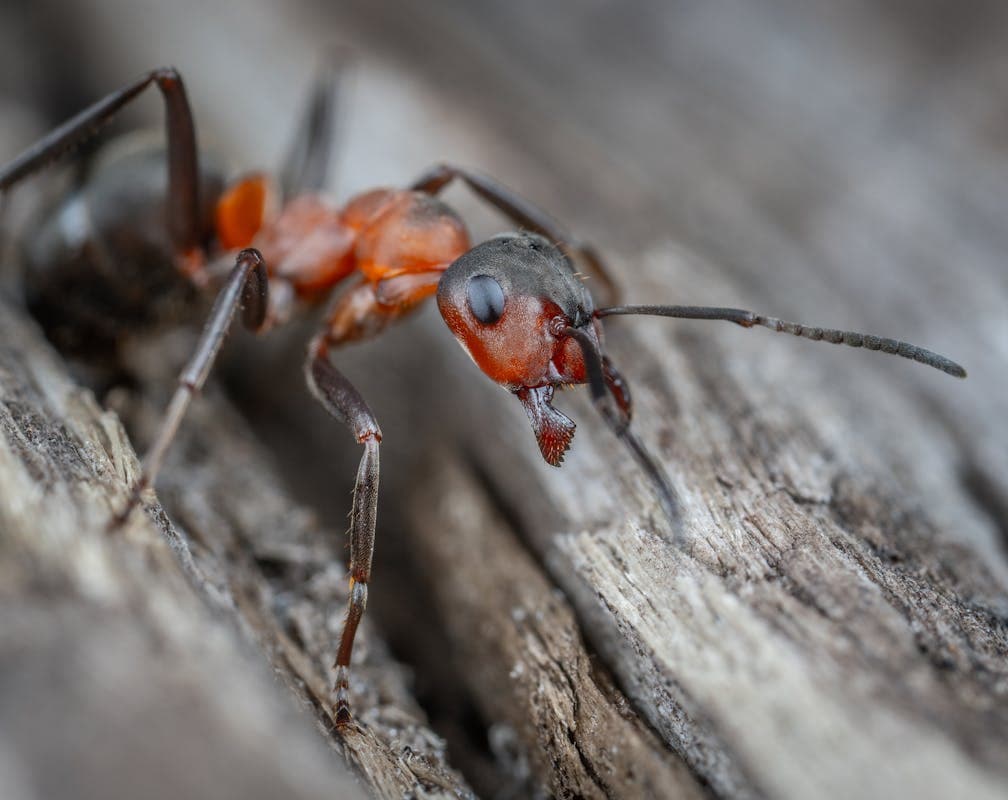
Ants
Carpenter ants, pavement ants, and odorous house ants are among the most common invaders in Central Maine homes.
About Ants in Central Maine
Maine is home to several ant species that regularly invade homes and businesses. Carpenter ants are the most destructive — they tunnel through damp or decaying wood to build their nests, causing structural damage over time. Pavement ants nest in cracks in driveways and foundations and send foraging trails into kitchens. Odorous house ants produce a rotten coconut smell when crushed and are attracted to sweet foods. Ant colonies can number in the tens of thousands, and over-the-counter sprays typically only kill the ants you can see while the colony continues to grow.
Carpenter ants and the European fire ant in Central Maine
UMaine Extension lists five carpenter ant species for Maine, and the eastern black carpenter ant (Camponotus pennsylvanicus) is by far the most common. Colonies start in live, dead or fallen trees wherever there is rot and moisture, so homes backed up to a woodlot carry more risk. Penn State Extension notes the parent colony usually sits outdoors within 100 yards of the house while workers keep satellite nests in the walls, and that sound wood under about 15 percent moisture is generally left alone.
Timing tells you a lot. Winged carpenter ants at indoor windows in late winter or early spring point to a nest inside the heated part of the building. Workers forage mostly at night, and Penn State suggests a flashlight check between 10 p.m. and 2 a.m. from May through July to follow trails back to the nest. Pavement ants, the other common kitchen ant, come up through foundation and slab cracks and forage up to 30 feet from the colony, according to UMaine.
A newer problem is the European fire ant (Myrmica rubra). UMaine has confirmed populations in Kennebec, Penobscot and Waldo counties, among others. Its sting leaves a red welt one to four inches across, its nests hide in lawns, leaf litter and debris rather than big mounds, and it travels mostly in potted plants, mulch and soil. Penn State notes satellite carpenter ant nests inside a building are unlikely to be eliminated without professional treatment.
Campbell's Pest Control offers ant control in Augusta, Waterville, Bangor and the other Central Maine towns we serve.
Signs of Ants
- Trails of ants along baseboards, countertops, or window sills
- Small piles of sawdust-like frass near wood (carpenter ants)
- Rustling sounds inside walls, especially at night
- Winged ants (swarmers) appearing indoors in spring
- Tiny dirt mounds near foundation cracks or pavement joints
Prevention Tips
- Seal cracks and gaps around foundations, windows, and pipes
- Keep food in sealed containers and clean up crumbs promptly
- Fix moisture issues — repair leaky pipes and improve ventilation
- Trim tree branches and shrubs away from the house
- Store firewood at least 20 feet from the home
- Check split firewood for carpenter ants before carrying it in to the woodstove
- Repair roof, gutter and flashing leaks so framing stays dry
- Follow night foraging trails with a flashlight in early summer to find the nest
- Inspect nursery plants, mulch and fill soil for European fire ants before spreading them
- Remove rotting stumps and logs close to the house
Did You Know?
- 1.A carpenter ant colony can contain over 50,000 workers
- 2.Ants can carry objects 10–50 times their own body weight
- 3.Carpenter ants don't eat wood — they excavate it and push it out as frass
Need Help With Ants?
Our ant control service targets ants at the source. Contact us for a free inspection and quote.