
Bees & Wasps
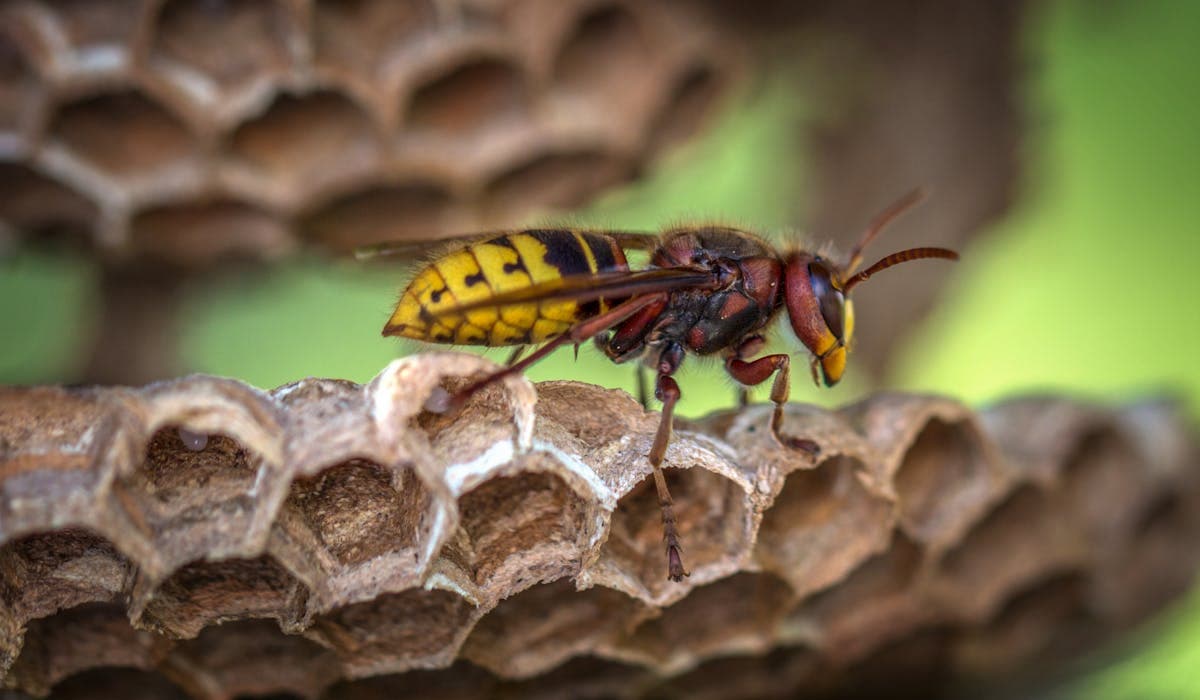
Paper wasps, yellow jackets, and hornets build nests near homes and can be aggressive when disturbed.
About Bees & Wasps in Central Maine
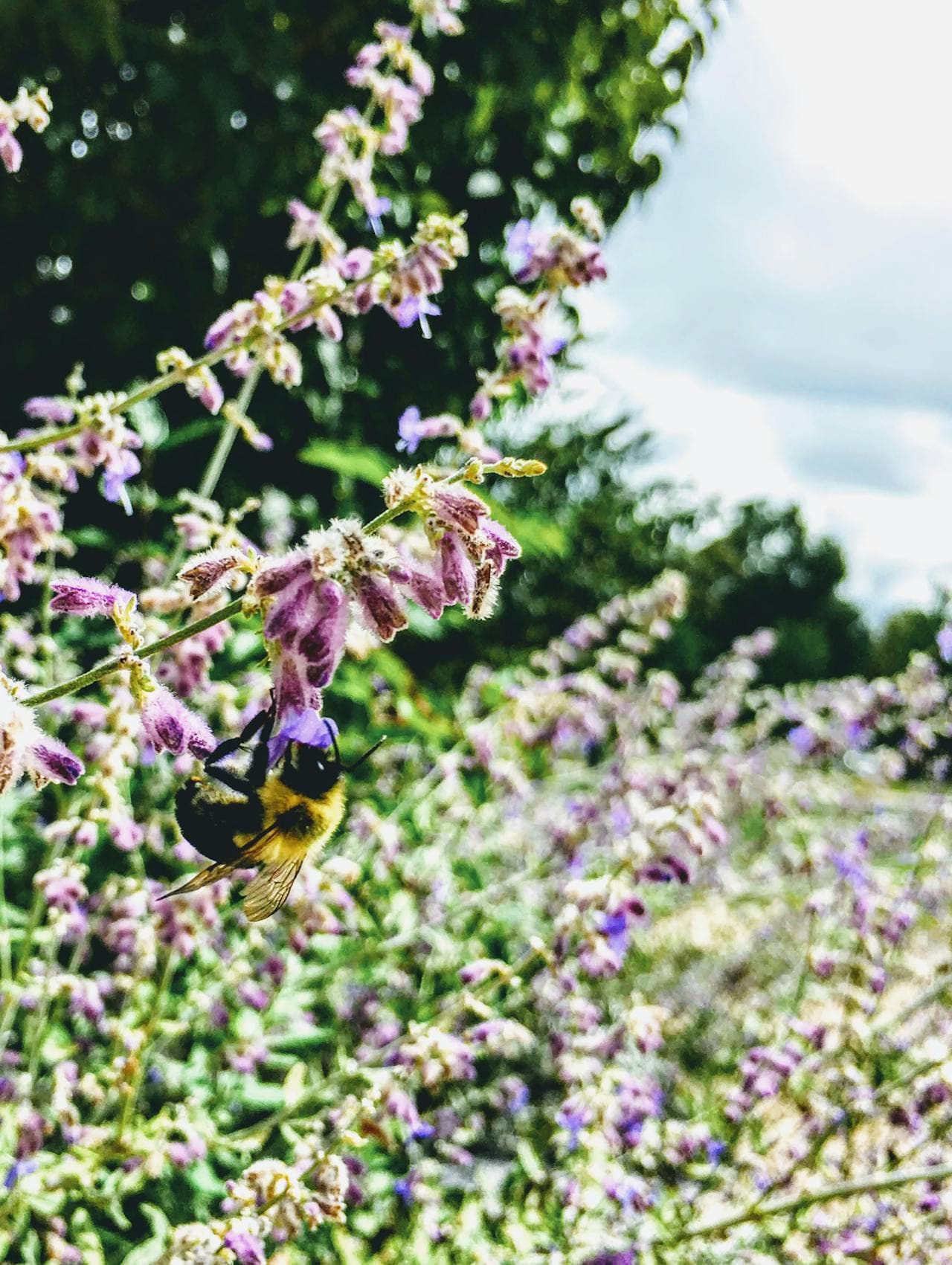
Several stinging insects are common in Central Maine, including paper wasps, yellow jackets, bald-faced hornets, and various bee species. Paper wasps build open, umbrella-shaped nests under eaves, decks, and in attics. Yellow jackets nest in the ground or in wall voids and are the most aggressive — they can sting repeatedly and are attracted to food at outdoor gatherings. Bald-faced hornets build large, enclosed paper nests in trees and shrubs. While honeybees and bumblebees are important pollinators and generally docile, wasps and hornets near high-traffic areas pose a real sting risk, especially to people with allergies. Professional removal is recommended for nests near doorways, play areas, or in wall voids.
Yellowjackets and bald-faced hornets through a Maine season
UMaine Extension lists eastern, German, common aerial, forest and northeastern yellowjackets among the species found in Maine, along with bald-faced hornets, European hornets and northern paper wasps. The bald-faced hornet is actually a black and white yellowjacket, and UMaine notes its workers are very aggressive around the nest and can sting repeatedly.
Every colony starts over each year. A single fertilized queen begins the nest in spring, workers multiply through summer, and colonies peak in mid to late summer. That is when yellowjackets turn to sweets and drinks at cookouts and fairs. Colonies die in late autumn with the cold, only new queens overwinter, and University of Kentucky entomologists note abandoned nests are not reused and soon fall apart. A gray paper nest spotted after the leaves drop is almost always empty.
Yellowjackets often nest in old chipmunk and rodent burrows, under rocks and landscape timbers, and inside stone walls, which describes plenty of Maine yards. Wall voids in older homes are another favorite. Kentucky's guidance warns never to plug a wall-void entrance while the nest is active, because the wasps can chew inward and come out inside the house. UMaine says nests are easiest to remove in early spring while small and should be treated at night when the wasps are least active. Kentucky recommends a professional when reaching the nest needs a ladder or is otherwise difficult.
Campbell's Pest Control offers wasp & hornet removal in Augusta, Waterville, Bangor and the other Central Maine towns we serve.
Signs of Bees & Wasps
- Visible nests under eaves, in bushes, or hanging from structures
- Increased wasp or bee activity around entry points or food areas
- Wasps entering and exiting a hole in the ground or a gap in siding
- Buzzing sounds inside walls or ceilings
- Finding dead wasps or bees indoors near windows
Prevention Tips
- Inspect eaves, decks, and outbuildings in early spring for new nests
- Seal gaps in siding, soffits, and around utility penetrations
- Keep trash cans sealed and clean up food and drinks at outdoor gatherings
- Avoid wearing floral perfumes or bright colors near known nesting areas
- Don't swat at wasps — it triggers an alarm pheromone that attracts more
- Walk eaves, sheds and camp porches in spring while new nests are still small
- Never seal an active wall-void entrance; wait until the nest is dead
- Approach or treat nests only after dark, when workers are inside
- Watch for ground traffic near stone walls, burrows and landscape timbers before mowing
- Leave empty nests found after hard frost alone; they are not reused
Did You Know?
- 1.Yellow jackets can sting multiple times, unlike honeybees which die after one sting
- 2.A mature yellow jacket nest can house 1,000–5,000 workers
- 3.Bald-faced hornets can squirt venom into the eyes of nest intruders
Need Help With Bees & Wasps?
Our wasp & hornet removal service targets bees & wasps at the source. Contact us for a free inspection and quote.