
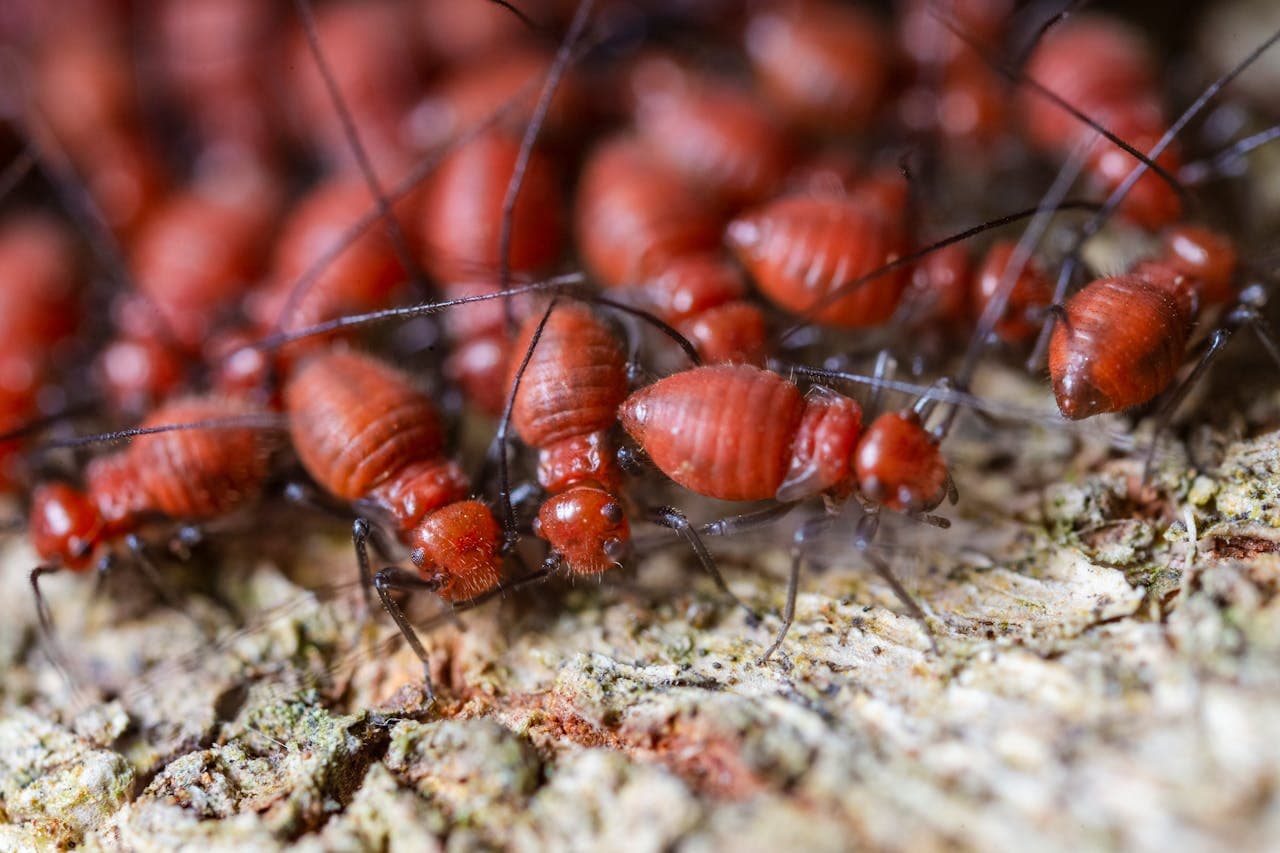
Termites
Eastern subterranean termites are present in Maine and cause significant structural damage — often undetected for years.
About Termites in Central Maine
Eastern subterranean termites are the primary termite species in Maine and one of the most destructive pests a homeowner can face. These insects live in underground colonies that can number in the hundreds of thousands, building mud tubes to reach wood above ground. They feed on cellulose in wood, paper, and other plant-based materials, silently consuming structural timbers from the inside out. Because they work hidden within walls and foundations, termite damage can go undetected for years — by the time visible signs appear, thousands of dollars in damage may already be done. Maine's freeze-thaw cycles and older housing stock make homes particularly vulnerable.
Telling termite swarmers from carpenter ants in Maine
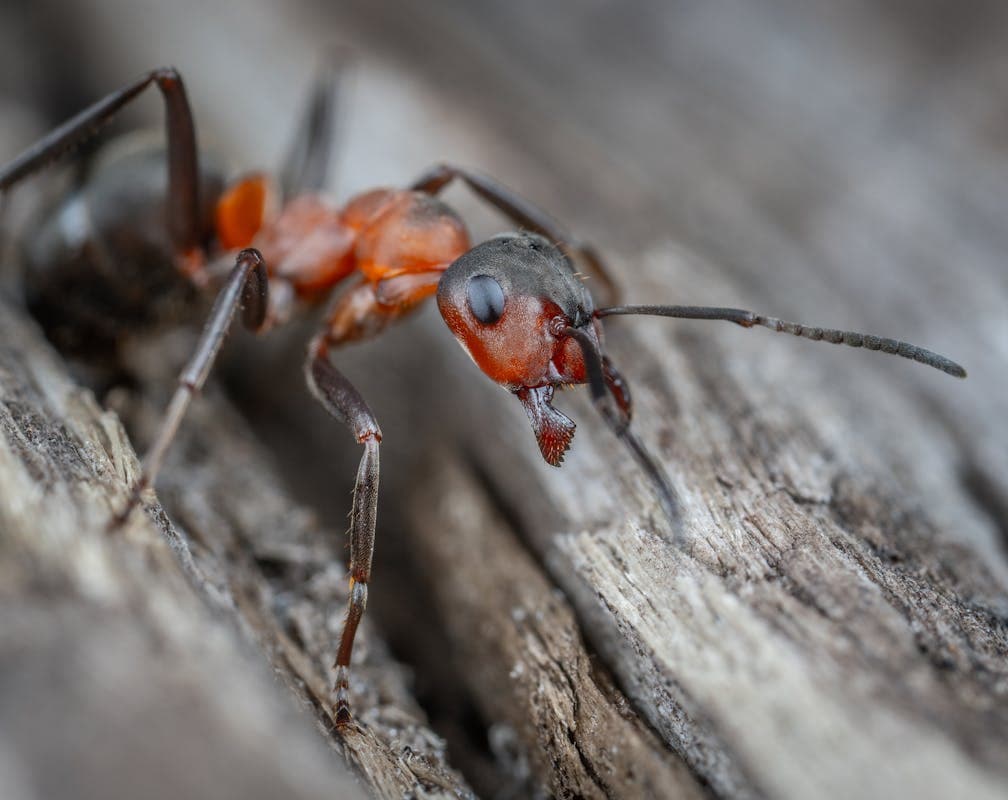
Termite questions often start with a swarm. Eastern subterranean termites swarm in spring, prompted by warmer temperatures and rain, and the winged swarmers are drawn to light at windows and doors. University of Kentucky entomologists note swarmers indoors almost always mean an infestation, but the swarmers themselves cannot damage wood and live only about a day. The quick test against carpenter ant swarmers: termites have straight antennae, a thick waist and four wings of equal size, while ants have elbowed antennae, a pinched waist and front wings longer than the hind wings.
Other signs are pencil-wide mud tubes on foundation walls, sills and piers, and wood hollowed along the grain with galleries lined with bits of soil. That soil is a useful clue, because Penn State notes carpenter ant frass is coarse wood fiber and insect parts with no soil in it. In older Maine houses, look closely at sills sitting low on stone foundations, porch posts set in dirt, and framing buried by fill or mulch.
Kentucky's guidance is reassuring on timing: damage progresses slowly enough that taking an extra day, week or month to choose a treatment is generally inconsequential. Homeowner products seldom eliminate an established colony. Professional liquid soil treatments with non-repellent termiticides last at least five years, while in-ground bait systems take weeks or months to work. Get more than one inspection and ask how the warranty is renewed.
Campbell's Pest Control offers termite inspection in Augusta, Waterville, Bangor and the other Central Maine towns we serve.
Signs of Termites
- Mud tubes running along foundation walls, piers, or in crawl spaces
- Hollow-sounding wood when tapped with a screwdriver
- Bubbling or peeling paint that resembles water damage
- Discarded wings near windows or doors (from termite swarmers)
- Sagging floors, doors that stick, or visible wood damage
- Tiny holes in drywall or wood surfaces
Prevention Tips
- Eliminate wood-to-soil contact around your foundation
- Keep gutters clean and direct water away from the foundation
- Fix leaks promptly — termites are attracted to moisture
- Store firewood at least 20 feet from the house and elevated off the ground
- Remove dead tree stumps, roots, and wood debris from your yard
- Schedule annual termite inspections, especially for older homes
- Keep wood at least six inches above soil around the foundation
- Cover about 75 percent of a crawl space floor with 4 to 6 mil polyethylene
- Keep mulch to a couple of inches and off siding and sills
- Never stack firewood against the foundation or inside a crawl space
- Grade soil and extend downspouts so water drains away from the house
Did You Know?
- 1.Termites cause over $5 billion in property damage in the US annually
- 2.A mature subterranean termite colony can consume about 16 grams of wood per day
- 3.Termite queens can live for 25+ years and lay thousands of eggs daily
Need Help With Termites?
Our termite inspections check for mud tubes, damaged wood, and swarmer wings, and tell termite damage apart from carpenter ants. Contact us to schedule an inspection.