
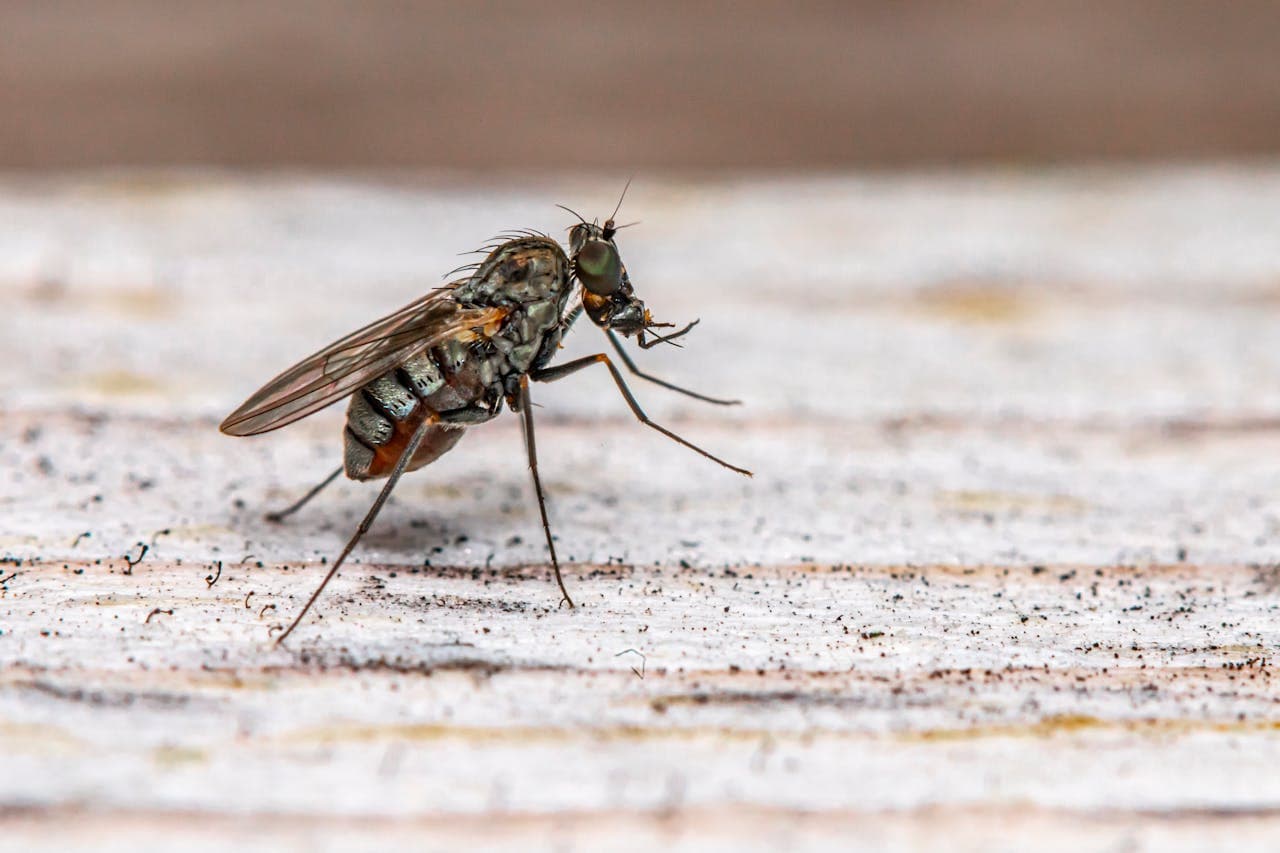
Flies
House flies, blow flies, and cluster flies are major nuisances in Maine, especially in rural areas near farms or wooded lots.
About Flies in Central Maine
Several fly species are common problems in Central Maine homes. House flies are the most familiar — they breed in garbage, animal waste, and decaying organic matter, landing on food and surfaces and spreading bacteria with every touch. Blow flies (metallic green or blue) are attracted to decaying meat and can indicate a dead animal in a wall void or attic. Cluster flies are larger, slower flies that invade attics and wall voids by the thousands in autumn to overwinter, emerging on warm days throughout winter and spring. Fruit flies breed in overripe produce, drains, and mop buckets. All flies reproduce rapidly and can contaminate food with disease-causing organisms including E. coli and salmonella.
Stable flies, face flies and blow flies in rural Maine homes
Not every house-fly look-alike is harmless. UMaine Extension points out that the stable fly, sometimes called the biting house fly, looks much like a house fly but both sexes feed on blood, and because they stay near the ground they go after feet and ankles. Near horses, cattle and manure piles, a fly biting ankles on the porch may well be a stable fly. UMaine also notes house flies can transmit at least 65 diseases because they feed on garbage and animal waste.
Face flies are a farm-country cousin of the cluster fly. They develop in cattle manure and, like cluster flies, crawl into walls and attics to spend the winter, reappearing at windows on warm, sunny days in early spring. University of Kentucky entomologists note window screens offer no protection against these overwintering flies, since they work in through small openings in walls, old window pulley holes and gaps around baseboards.
A sudden crop of shiny blue-green flies indoors, especially in winter, often traces back to carrion. UMaine describes blow flies and flesh flies as drawn to anything rotting or decaying, and inside a house that frequently means a mouse or squirrel that died in a wall, attic or under an appliance. Removing the carcass ends the problem; spraying the flies does not. Fruit flies, 2 to 3 mm long according to UMaine, feed on overripe fruit, so a bowl of late-season apples or garden tomatoes can start a kitchen outbreak.
Campbell's Pest Control offers general pest control in Augusta, Waterville, Bangor and the other Central Maine towns we serve.
Signs of Flies
- Increased fly activity indoors, especially near windows and kitchens
- Maggots in garbage cans, pet areas, or near organic waste
- Large numbers of slow-moving flies in attics or upper floors (cluster flies)
- Metallic-colored flies indoors (may indicate a dead animal nearby)
- Small flies hovering around drains, fruit bowls, or trash cans
Prevention Tips
- Keep garbage in sealed containers and take it out regularly
- Clean up pet waste promptly from your yard
- Install and maintain tight-fitting window screens
- Store produce in the refrigerator and dispose of overripe fruit
- Seal entry points in soffits, attic vents, and around windows before fall
- Clean drains regularly to prevent drain fly breeding
- Keep manure and compost piles well away from the house and covered
- Caulk wall gaps, trim and old window pulley holes before fall; screens alone will not stop overwintering flies
- When metallic flies appear indoors, search for a dead rodent and remove it
- Refrigerate ripe garden produce rather than leaving it on the counter
- Keep garbage and compost bins lidded and rinse recycling
Did You Know?
- 1.A single house fly can carry over 100 different disease-causing pathogens
- 2.House flies taste with their feet — they have taste receptors on their leg hairs
- 3.A female house fly can lay up to 500 eggs in her 30-day lifespan
Need Help With Flies?
Our general pest control service targets flies at the source. Contact us for a free inspection and quote.